
The Foundation of Vacuum Performance
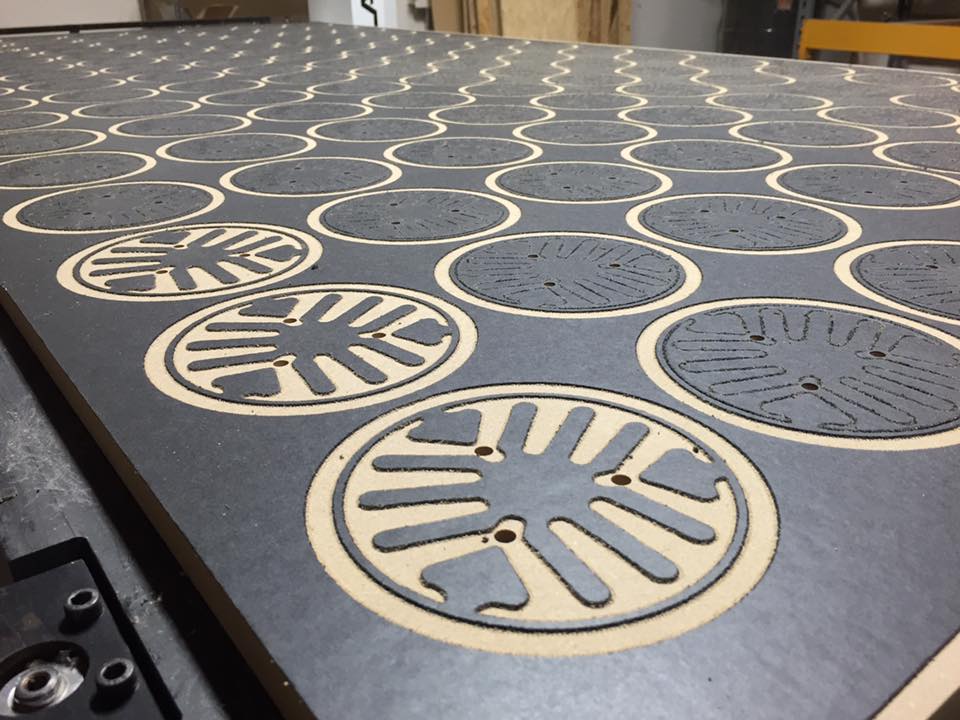
Cover Gasket is used by the shops that All Star works with who are designing and creating Dedicated Fixtures for holding parts with limited surface area. This may include small parts, parts with tight angles, or parts with one or more holes through the workpiece. Cover Gasket allows the gasket pattern to match the part, the cut path, and the way the operator wants air controlled under the workpiece. In All Star’s humble opinion, this is where vacuum hold-down starts to become more directed and intentional. Instead of depending on a general-purpose spoilboard or wide-open vacuum zone, a Cover Gasket approach helps create a controlled sealing surface over the fixture. That allows the operator or fixture builder to direct vacuum where it is needed, reduce open-air draw, and improve hold-down on parts that may be difficult to manage with a standard table setup.
For CNC operators and fixture builders, the advantage of Cover Gasketing is repeatability — especially when clamping parts that have proven difficult, if not impossible, with other gasketing techniques. When the cover material and gasket layout are properly matched to the part, the vacuum system can pull more efficiently against the workpiece, maximizing the limited surface area available for hold-down while minimizing the non-vacuumed areas of the part. The goal is to get the vacuum pocket as close to the tool path as possible, because the tooling is what creates the cutting force and the potential for movement. Cover Gasket gives shops a “blank canvas” for building dedicated fixtures that hold dedicated small parts more securely, more consistently, and with fewer workarounds.
What Product is Best for my Project?
- Small parts that tend to shift, lift, or pop loose
- Custom fixtures and intricate shapes where you need a tight perimeter seal
Technical Guidelines
Thickness guidelines
- 1/32″ (CR 03) — Best for very flat materials, especially plastics and other consistent surfaces.
- 1/16″ (CR 06) — Best for most wood products where slight thickness variation is common. (Most common choice.)
- 1/8″ — (CR 12) Best for very uneven surfaces that need extra compression to seal.
Common materials include:
- HDPE
- 5-7 Layer Baltic Birch plywood
- Phenolic or composite sheets
Maintenance
- Inspect regularly for wear or compression set
- Replace when the gasket becomes flattened or torn
- Small leaks have a bigger impact on small-part applications
How Cover Gasket is Provided
Cover Gasketing is offered in three convenient formats:
- SBC (Spoilboard Cover) — Typically enough material to cover a 4’×8′ board.
- ZBC (Zone Board Cover) — Custom-width rolls at extended lengths; ideal when making multiple dedicated fixture at the same width.
- LFC (Lineal Foot Cover) — Order by the square foot for maximum flexibility
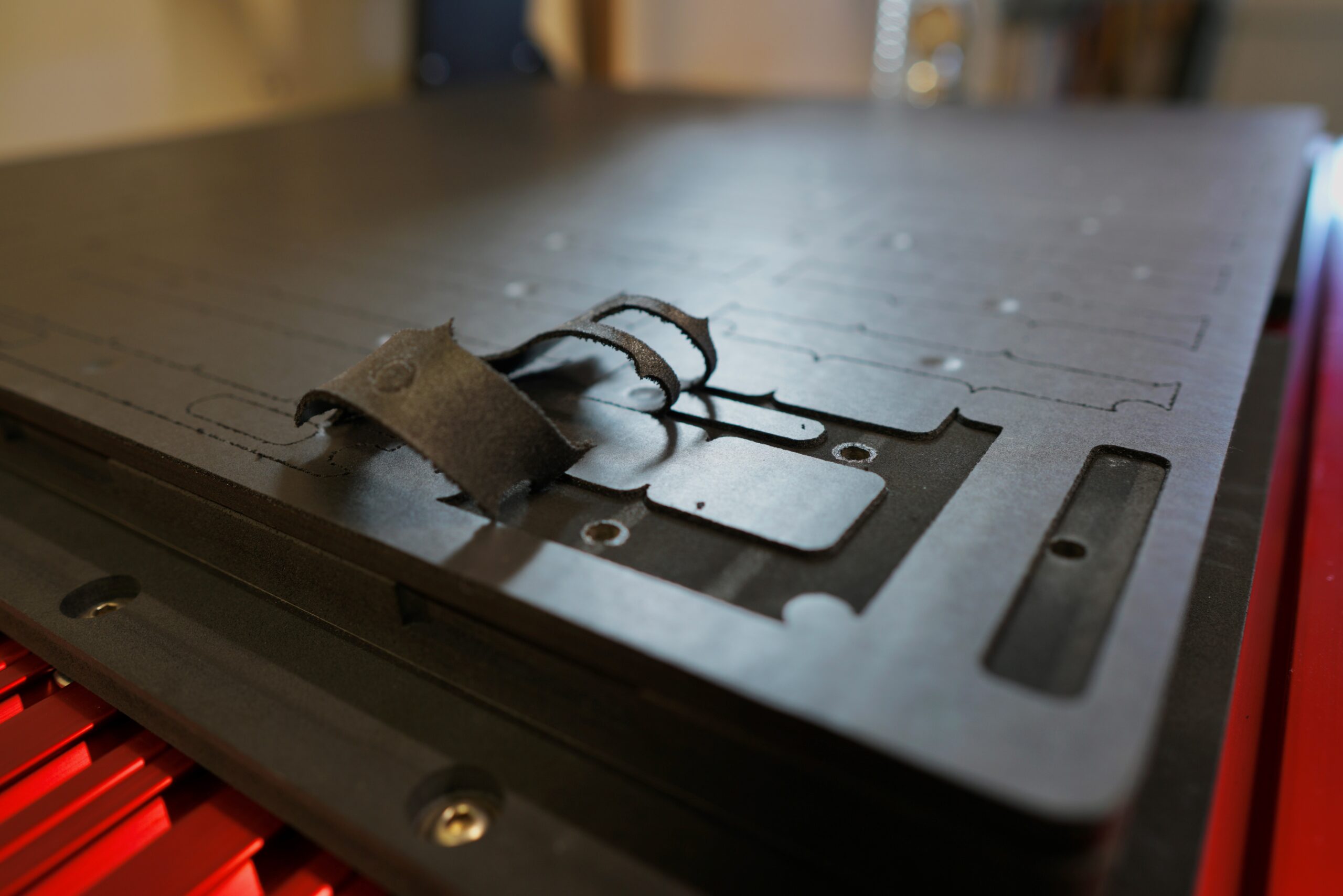
How do I design a Cover Gasket fixture?
- Cover the nonporous Fixture with Cover Gasket
- Lay out the pattern to cut the part profile
- Use an engraving bit to mill the gasket perimeter
- Remove the gasket for the vacuum pocket and router channel
- Drill through ports for vacuum
FAQ’s
- When should I use Cover Gasket instead of Inboard Gasket?
When the surface area Is limited and parts are too small or irregular for perimeter sealing with a channel. - Why is Cover Gasket effective for small parts?
Because you don’t need to route a channel you can create a vacuum cavity under small part - Can I use Cover Gasket on sharp corners or intricate shapes?
Yes — this is one of its best uses. The reason cover gasket works for sharp and intricate shapes is that you custom cut the gasket with and engraving bit. This gives you the flexibility to design small intricate vacuum cavities. - How long does Cover Gasket last?
It depends on usage and handling. Replace it when: The gasket becomes flattened or crushed or It no longer creates a tight seal. - What are common mistakes when using Cover Gasket?
- Choosing the wrong thickness/density for the material or surface condition
- Using Cover Gasket on a porous fixture board, which can cause vacuum loss
- Not getting full, even contact (dust/debris, uneven board, or poor compression)
- Trying to patch small sections instead of replacing the sheet when worn
Testimonials
We were approached by a local company to produce handle components, and the parts were extremely small. We wouldn’t have been able to take on this work without All Star Cover Gasket. We quickly connected with their team, and they were highly accommodating in helping us find the best solution. We continue to produce these parts weekly and couldn’t be happier with how the process has turned out. Cover Gasket has reduced our run time and the number of lost parts on our CNC.
Dean Rovedo Jr.
Platinum Woodworking
