
The Foundation of Vacuum Performance
In All Star’s humble opinion, Inboard Gasketing is one of the best ways to hold parts with vacuum. It is designed for dedicated fixtures and repeat part production where reliable, repeatable hold-down matters. Instead of relying on a full drafty-spoilboard-table setup, a dedicated fixture creates a defined vacuum area directly under the part. The Inboard Gasket seals the perimeter of that area, helping reduce air leakage and increase clamping force where the operator needs it most. This is especially useful for repetitive parts and jobs where part movement, onion skins, tabs, or recuts are slowing production.
For CNC operators and fixture builders, the advantage of placing gasket in a routed channel is control. A properly designed channel helps maintain tight Z-depth tolerances while allowing the gasket to compress only the amount needed to create a reliable seal. Because the gasket is not fully crushed like a surface-mounted gasket, it can also extend gasket life and help maintain more consistent performance over time. When properly placed and compressed, the vacuum system pulls evenly and efficiently against the workpiece, improving edge sealing and giving the operator more confidence through the cut. For shops running repeat jobs, that can mean faster setups, fewer workarounds, less babysitting, and cleaner, more predictable production.
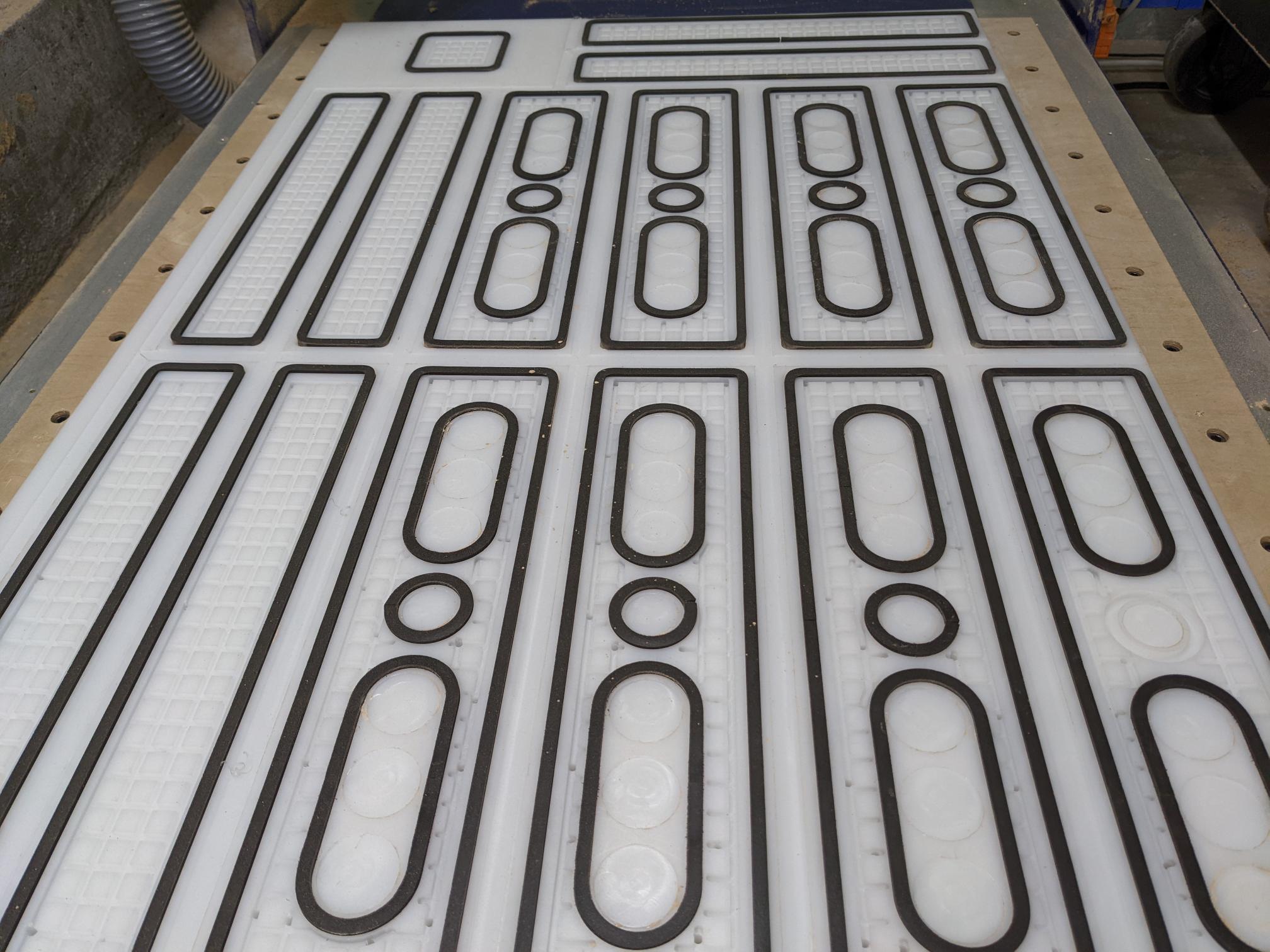
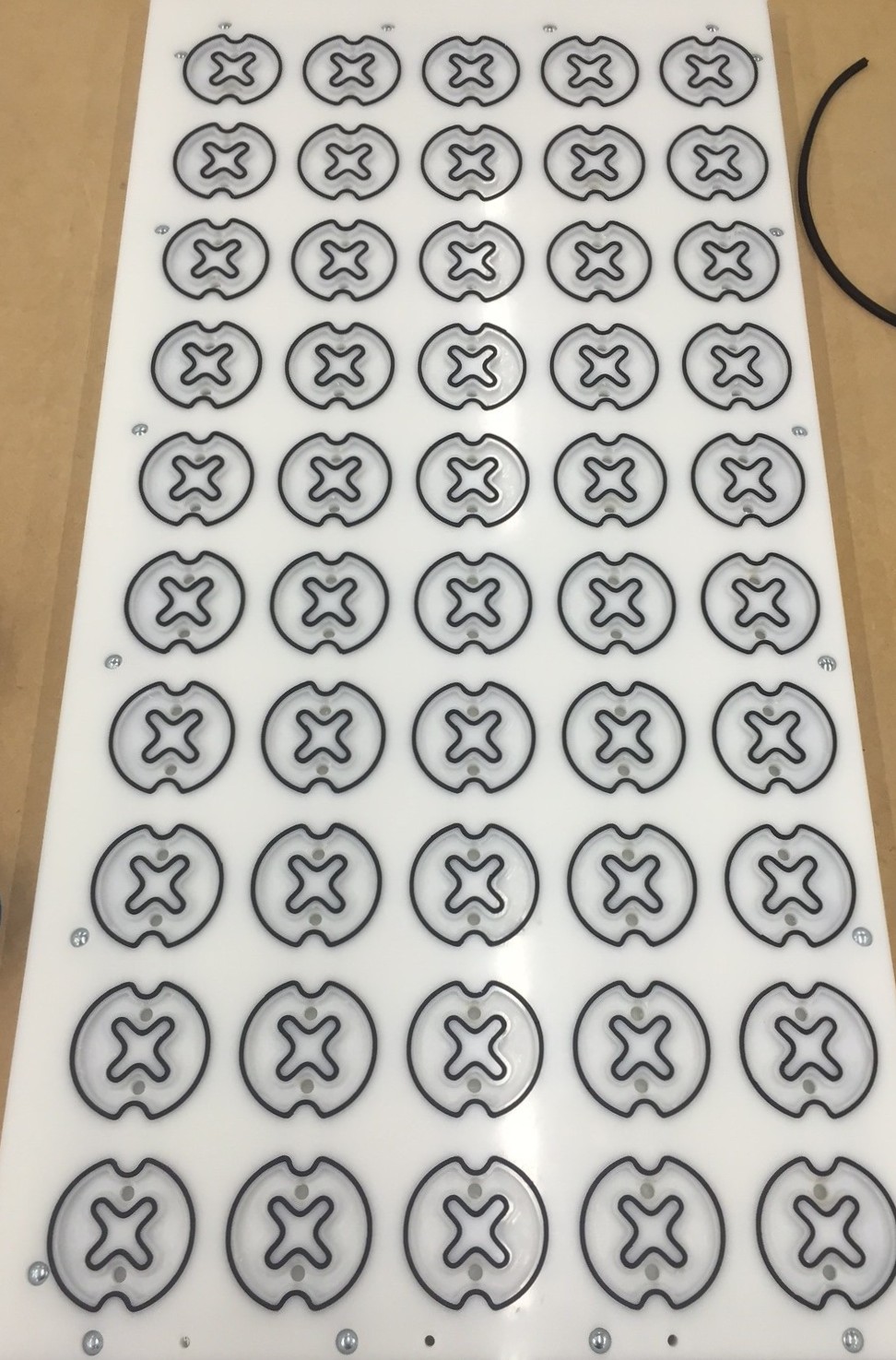
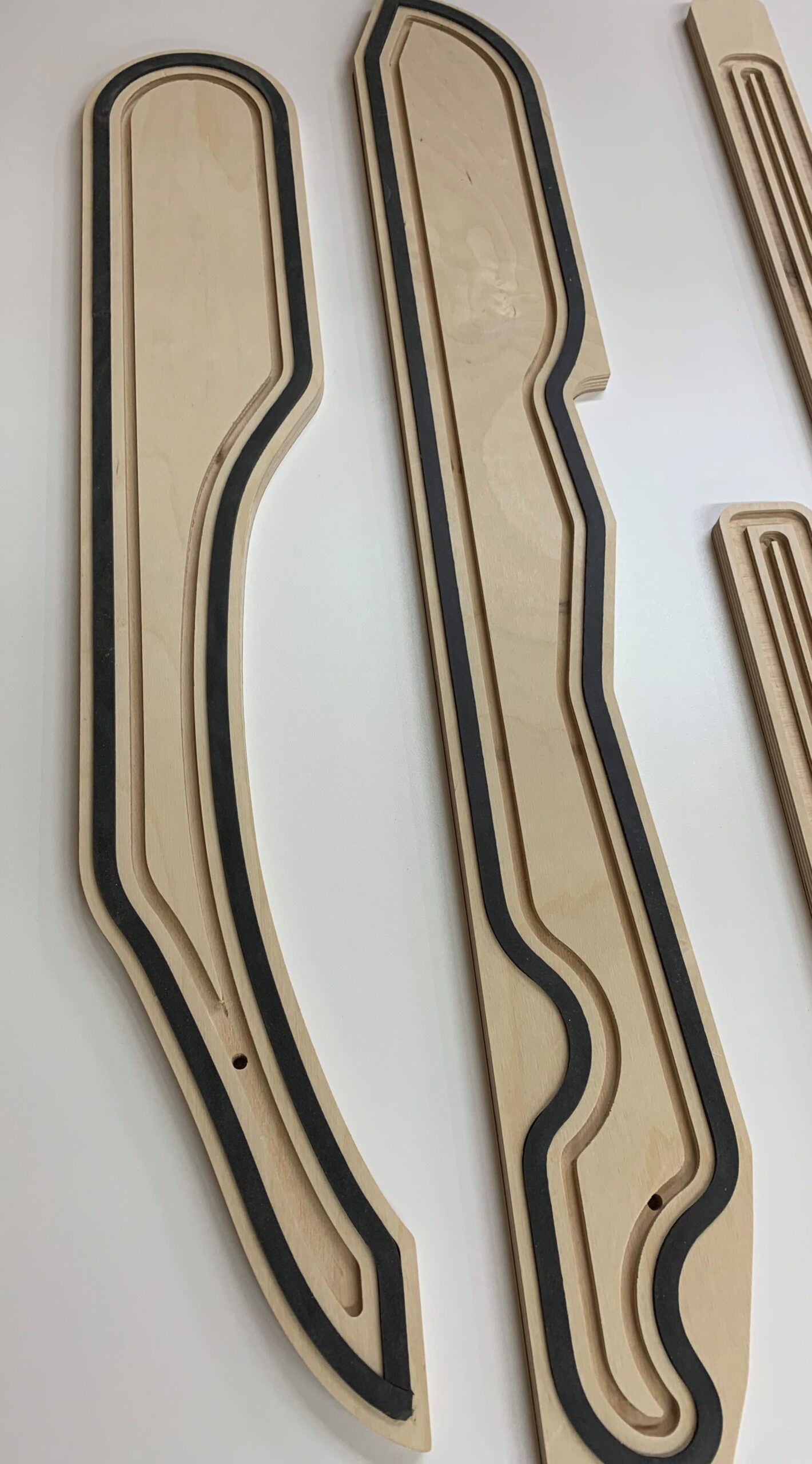
Inboard Fixture Setup Guidelines
For best performance, your fixture design must create a tight, controlled vacuum pocket.
Select Fixture Material
Use a non-porous material to prevent vacuum loss through the fixture.
Recommended materials:
- Melamine
- Baltic Birch
- HDPE
Create a Vacuum Pocket
Machine a slight recess into the fixture surface to create a defined vacuum pocket beneath the part.
Add Vacuum Port Holes
Drill or machine vacuum holes to transfer vacuum from the grid table below.
Ensure vacuum reaches:
- The parts
- Surrounding waste areas
Machine the Gasket Channel
Route the gasket channel around the part geometry.
Add a slight chamfer to the top edge of the channel to prevent gasket pinching.
Standard Starting Configuration
Use CR 25 38 as a standard starting point.
Recommended Channel Size
- 3/8” wide
- 3/16” deep
This leaves approximately 1/16” of gasket proud above the fixture surface for proper compression.
Adjust for Material Variance
If your material has warp or thickness variation, use a thicker gasket:
- CR 38 38
- CR 50 50
This allows additional compression while maintaining a proper seal.
Verify Fit & Seal
Ensure the gasket sits proud and compresses evenly when the part is placed.
FAQ’s
- What is Inboard Gasket used for?
Inboard Gasket is used to create dedicated fixtures, sealing directly around a part or group of parts to maximize vacuum hold-down for repeat production. - What is Inboard Gasket used for?
Inboard Gasket is used to create dedicated fixtures, sealing directly around a part or group of parts to maximize vacuum hold-down for repeat production. - When should I use Inboard Gasket?
- Running repetitive parts
- Needing maximum hold-down strength
- Wanting to eliminate tabs or Onion Skins
- How does Inboard Gasket improve vacuum performance?
By sealing a smaller, defined vacuum zone, it increases effective clamping force—resulting in stronger hold and more consistent cuts. - How high should the gasket sit?
The gasket should sit approximately 1/16” proud above the fixture surface to ensure proper compression and sealing. - What happens if the gasket is too low or worn out?
If the gasket becomes flush, it will not seal properly—resulting in vacuum loss and poor hold-down. - How do I choose the right gasket size?
- Match gasket width to your groove/channel
- Ensure proper height for compression
- Not sure? Send us a photo or dimensions—we’ll help you choose
- What density should I use?
- Medium density → Is the standard choice for martial with average inconsistency and a descent sized vacuum.
- Low density → Is for light materials and a low flow vacuum
- How long does Inboard Gasket last?
It depends on the handling of loading and unloading material and weight of material.
Replace it when:- It becomes compressed or flattened
- It no longer creates a tight seal
- Regular inspection ensures consistent performance.
- Can I retrofit this into an existing fixture?
Yes. Inboard Gasket can be installed into new or existing fixtures, as long as the groove/channel is properly sized.
Testimonials
We’ve had nothing but quality, service, and satisfaction working with Allstar and their products!
Joe Miller
We’ve been applying Allstar’s In Board Gasket to our dedicated jigs to route small hardwood parts. With this gasket, we’ve had sufficient vacuum and no moving parts!
Max vacuum equals max performance, and with Allstar, we experience both!
Century Components
Sugarcreek, Ohio
